
Contact Us
Complete the form below for a free case evaluation.
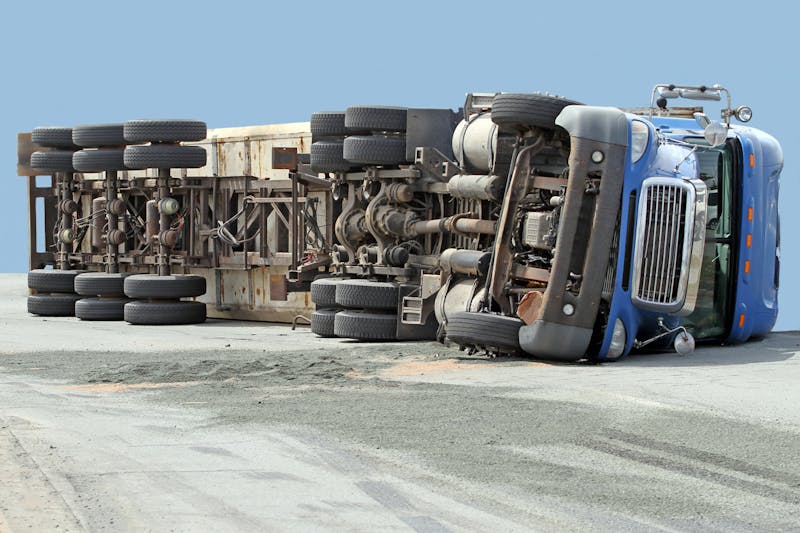
When you’ve been injured in a truck crash, especially involving an 18-wheeler, you’re likely facing serious physical harm, mounting medical bills, lost wages, and emotional pain. You need solid, credible evidence to build a powerful case for full compensation.
Rest assured, you don’t have to “build” the evidence file on your own. In most truck accident cases, the most important proof is not something an injured person can realistically collect—because it’s held by the trucking company, its insurers, law enforcement, or third parties. That’s where experienced truck accident trial lawyers make the difference.
At Webster Vicknair MacLeod, our nationally recognized trial lawyers have spent decades litigating high-stakes trucking cases across Texas and the United States. We’re publishing this guide to share the insight gained in courtrooms and through multi-million-dollar verdicts, so you understand what evidence truly makes or breaks a case.
In most truck cases, the strongest evidence comes from systems and records, not from what someone personally “gathers.”
Police documentation often provides the first formal account of what happened, including:
In Texas, when a law enforcement officer investigates a crash involving injury/death or apparent property damage of $1,000 or more, the officer is required to create a written report and file it electronically within 10 days.
These records reveal what was happening before the impact and whether rules were followed. Details which may be covered include the following:
It’s important to note that this evidence is typically not handed over voluntarily. It often requires prompt preservation demands and a formal legal process.
Modern commercial trucks often record critical data, such as:
That information can be powerful because it’s objective, but it can also be fragile. Some systems overwrite data unless it’s preserved quickly, which is why early action matters even if you’re still in the hospital.
Video can confirm:
However, it’s frequently deleted on short retention cycles. As such, part of building a strong case is knowing who might have footage and moving fast to secure it.
Independent witness accounts can fill in gaps that cameras miss. The challenge is that memories fade and people become harder to locate over time. Prompt follow-up can help preserve clear and consistent testimony.
Your medical records help connect:
You should not feel like you have to “collect” medical evidence yourself; your legal team obtains records and bills through proper authorizations and requests.
Under Texas Rule of Evidence 702, an expert must be qualified and offer specialized knowledge that helps the judge or jury understand the issues at hand.
Expert testimony can also be essential when the defense argues that your injuries came from something else. In JLG Trucking, LLC v. Garza, the Texas Supreme Court addressed disputes about causation and emphasized the importance of relevant evidence when alternate causes are at issue.
In serious trucking cases, our job is to take pressure off you while we build the proof where it actually lives: inside records, data, and testimony that must be demanded, preserved, and presented correctly.
That includes:
If you were hurt in a truck crash, you need a team that knows what evidence exists, how to preserve it, and how to use it to hold the right parties accountable. Contact Webster Vicknair MacLeod today for a free case evaluation. We work on a contingency basis; you don’t pay unless we win.
Complete the form below for a free case evaluation.
© Webster Vicknair Macleod. All Rights Reserved.