
Contact Us
Complete the form below for a free case evaluation.
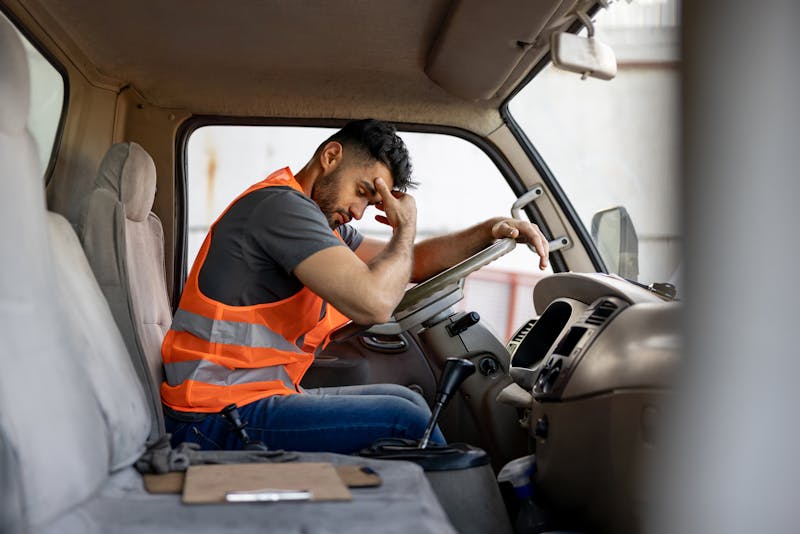
Driver fatigue is a known and deadly risk in commercial trucking, but no driver is going to admit they were too tired to be behind the wheel, and fatigue doesn’t show up on a breath test. So how do you prove it?
You prove it with data, federal safety rules, and relentless investigation.
At Webster Vicknair MacLeod, we bring more than 120 years of combined trial experience to complex trucking cases nationwide. We know that driver fatigue cases are built from electronic logging device data, black box downloads, dispatch records, cell phone data, and corporate safety policies—then tied directly to violations of federal Hours-of-Service regulations and to the cause of the crash.
In this blog, we break down how fatigue contributes to serious Texas truck accidents, what evidence lawyers look for, and how these cases are proven in court when lives have been permanently changed.
Fatigue is not just “feeling tired”; it is a measurable safety hazard. The Centers for Disease Control and Prevention explains that sleep deprivation affects attention, reaction time, and decision-making—core skills required to safely operate a commercial vehicle weighing up to 80,000 pounds (CDC).
The FMCSA has established federal Hours-of-Service (HOS) regulations limiting how long drivers may operate without rest. Most property-carrying drivers are limited to:
11 hours of driving after 10 consecutive hours off duty
A 14-hour maximum on-duty window
Required rest breaks (FMCSA Hours of Service)
These rules exist because fatigue-related crashes are predictable and preventable. When they are violated, accountability follows.
Federal law requires most commercial drivers to use ELDs to record driving time (FMCSA ELD Rule). These logs can reveal:
Hours-of-service violations
Falsified entries
Patterns of overdriving
We compare ELD data to dispatch schedules, fuel purchases, GPS data, and toll records to identify inconsistencies.
Many commercial trucks are equipped with event data recorders that capture speed, braking, throttle input, and other operational data before a crash. NHTSA has detailed the safety value of such crash data systems (NHTSA EDR Overview). If a fatigued driver failed to brake or react, that data often tells the story.
Fatigue can also be a company problem. Emails, text messages, load assignments, and internal safety policies may reveal pressure to meet unrealistic delivery deadlines.
Under federal safety regulations, motor carriers are responsible for ensuring compliance with safety rules, including hours-of-service requirements (FMCSA Safety Regulations). If a company either encourages or ignores violations, liability expands.
Phone records may reveal late-night activity, distracted driving, or inadequate rest periods.
Conditions such as obstructive sleep apnea can significantly increase crash risk if untreated. The FMCSA recognizes the safety risks posed by untreated sleep disorders in commercial drivers (FMCSA Medical Program). When necessary, medical experts analyze whether a driver was medically unfit to operate safely.
Depending on the evidence, responsibility may fall on:
The driver (for violating hours-of-service limits)
The trucking company (for negligent supervision or pressure to exceed limits)
Maintenance or logistics contractors
Other corporate entities involved in dispatch and scheduling
Texas law generally allows a two-year period from the date of injury to file a personal injury claim. Acting quickly helps preserve critical evidence before it is lost.
A logbook violation alone is not enough. To win a fatigue case, you must prove the driver was too tired to operate safely, and that exhaustion caused the crash and the injuries that followed.
That takes immediate, aggressive action, something Webster Vicknair MacLeod excels at.
We act quickly to secure ELD data, black box downloads, dispatch communications, and internal company records before they're lost. We work with reconstruction and human performance experts to connect the dots between hours-of-service violations, slowed reaction times, and the collision itself. And if a trucking company refuses accountability, we prepare the case for trial from day one.
Fatigue cases are complex and heavily defended. With more than 120 years of combined trial experience, Webster Vicknair MacLeod has the resources, reputation, and resolve to uncover the truth and present it clearly to a jury.
If you believe driver fatigue played a role in a Texas truck accident, do not wait. Call (713) 581-3900 today for a free case evaluation.
Complete the form below for a free case evaluation.
© Webster Vicknair Macleod. All Rights Reserved.