
Contact Us
Complete the form below for a free case evaluation.
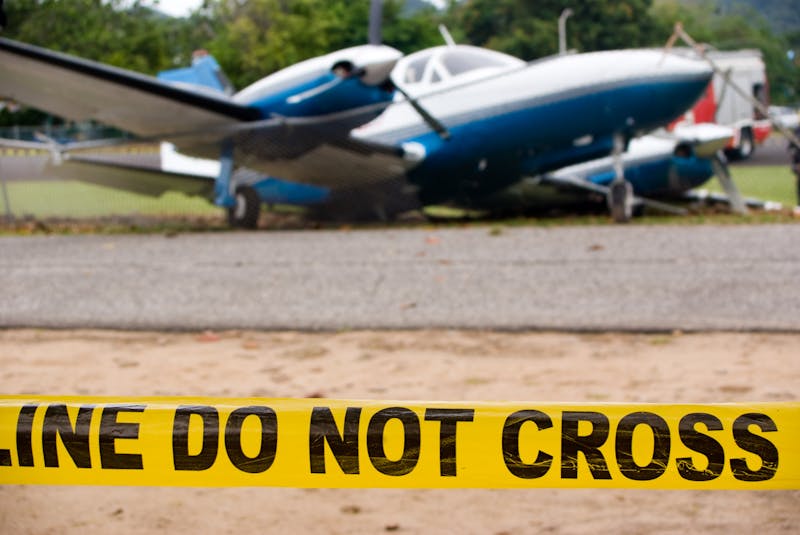
Commercial air travel is widely considered safe. According to safety data compiled by the Bureau of Transportation Statistics, fatal airline accidents in the United States are relatively uncommon compared to other modes of transportation.
But when aviation accidents occur, they frequently result in multiple fatalities. In Texas, general aviation crashes—including private aircraft—happen each year. The NTSB’s aviation accident database documents investigations across the state, including incidents involving small aircraft and helicopters.
Because aviation cases often involve catastrophic loss, wrongful death claims tend to be high-value, highly technical, and aggressively defended.
At Webster Vicknair MacLeod, we bring more than 120 years of combined trial experience to high-stakes litigation. We have handled aviation-related wrongful death and product liability cases against major aviation companies and are prepared to take complex cases to trial when necessary. Below is what families in Texas should understand.
Under Texas law, a wrongful death claim arises when a person’s death is caused by another party’s wrongful act, neglect, carelessness, unskillfulness, or default. The governing statute, Texas Civil Practice & Remedies Code § 71.002, allows surviving family members to seek damages when a loved one’s death could have supported a personal injury claim had they survived.
In aviation cases, wrongful death claims may arise from:
Pilot error
Air traffic control negligence
Improper aircraft maintenance
Defective aircraft design or manufacturing
Weather-related decision errors
Operational violations of federal aviation regulations
Many aviation cases also involve potential product liability claims arising from aircraft component failures.
Texas law limits who may bring a wrongful death lawsuit. Under Texas Civil Practice & Remedies Code § 71.004, eligible parties include:
The surviving spouse
Children (including legally adopted children)
Parents of the deceased
If these individuals do not file within three months of the death, the personal representative of the estate may file, unless the family objects. It’s important to note that siblings are not permitted to bring wrongful death claims under Texas law.
In most cases, Texas imposes a two-year statute of limitations for wrongful death claims.
Missing this deadline can permanently bar your claim. While limited exceptions may apply—such as fraudulent concealment or certain cases involving minors—families should assume the clock is running.
In aviation cases, early action is critical. Evidence can include:
Flight data
Cockpit voice recordings
Maintenance logs
Weather records
Communications with air traffic control
Federal investigators may secure much of this information, but an independent legal investigation is often necessary to protect your family’s interests.
Aviation litigation is not like a typical car accident case. It often requires coordination with accident investigators, aviation engineers, medical experts, and regulatory specialists.
Federal agencies such as the NTSB investigate crashes to determine probable cause.
However, their findings do not automatically resolve civil liability. Families pursuing wrongful death claims must still establish:
Duty of care: The defendant owed a legal duty (for example, a pilot’s duty to operate safely or a manufacturer’s duty to design a safe aircraft).
Breach of duty: That duty was violated.
Causation: The breach directly caused the death.
Damages: The family suffered legally compensable losses.
Because aviation is heavily regulated, violations of FAA regulations may serve as powerful evidence of negligence. The Code of Federal Regulations, Title 14 (Aeronautics and Space) outlines operational and safety requirements for pilots, airlines, and aircraft operators.
In some cases, multiple defendants share responsibility—for example, a manufacturer, a maintenance contractor, and an operator.
A wrongful death claim can provide financial relief for the measurable and immeasurable losses a family suffers. Under Texas law, recoverable damages may include:
Funeral and burial expenses
Medical costs related to the final injury
Loss of financial support
Loss of companionship and society
Loss of inheritance
Mental anguish
In cases involving gross negligence or willful misconduct, punitive damages may also be available. While no lawsuit can undo the loss, holding negligent parties accountable can provide financial stability and a measure of justice.
If your family is facing the aftermath of an aviation accident:
Avoid signing releases or settlement documents without legal review
Preserve any communications from airlines, insurers, or investigators
Consult an attorney experienced in catastrophic and aviation litigation as soon as possible
Early legal involvement can help secure evidence, coordinate with investigators, and prevent procedural missteps that could harm your claim.
Wrongful death claims after an aviation accident in Texas are about more than compensation. They are about uncovering what happened, holding accountable the responsible parties, and protecting other families from preventable tragedy.
At Webster Vicknair MacLeod, we handle high-stakes cases nationwide involving catastrophic injury and wrongful death. Our team has pursued complex litigation against major corporations and aviation-related defendants, and we prepare every case as if it will go to trial. We operate on a contingency fee basis—meaning you pay nothing unless we win.
Put 120+ years of combined trial experience in your corner. Call Webster Vicknair MacLeod today at (713) 581-3900 for a free consultation.
Complete the form below for a free case evaluation.
© Webster Vicknair Macleod. All Rights Reserved.